
The dock is where promises meet reality in logistics. Every minute a trailer idles translates into cost, congestion, and stress on teams working against the clock. A modern loading unloading conveyor is the silent engine that turns that chaos into rhythm—accelerating parcel flow, protecting workers from strain, and giving operations data-driven control. Whether you’re scaling an express parcel hub, optimizing a cross-border e-commerce warehouse, or modernizing industrial shipping and receiving, the right conveyor choice aligns throughput, safety, and space utilization with the demands of a volatile market.
What a Loading Unloading Conveyor Does—and Why It Matters
At its core, a loading unloading conveyor bridges the gap between a fixed facility and a moving vehicle. It extends into vans, box trucks, and trailers to bring the work to the operator, rather than forcing teams to walk long distances with packages. The result is faster load cycles, reduced trailer dwell time, and consistent, predictable flow at the dock. Systems range from simple mobile belt units to advanced telescopic belt conveyors with multiple boom stages, powered elevation, and integrated controls—each tailored to product mix and dock layout.
For parcel-heavy operations, a telescopic unit with reversible belts, variable speed, and an articulating “knuckle” section keeps the discharge point close to the floor for ergonomic handling at the start and end of a trailer. For cases and totes, belt widths and side guides maintain product orientation, while for irregular freight or sacks, deeper sidewalls and impact-resistant construction improve control. Facilities moving pallets or heavier items frequently pair powered belts with robust roller sections and dock levelers, balancing gentle handling with high capacity.
The operational upside compounds across shifts. A right-sized unloading conveyor can cut manual lifting and walking by thousands of steps per worker per day, lowering fatigue and injury risk. It flattens peak pressure during daily surges and seasonal spikes by raising packages-per-hour (PPH) without proportional headcount. And because the conveyor standardizes how goods enter or exit the building, upstream systems—like sorting, scanning, and putaway—receive a steadier rhythm. That rhythm enables better labor planning, fewer hot zones, and clearer accountability of KPIs such as trailer turn time, dock-to-stock time, and OEE. In industries like express delivery, warehousing, cross-border logistics, and mixed industrial loading scenarios, these seemingly small wins add up to lift total network performance.
Modern designs further amplify reliability and safety. Soft-start drives protect belts and mechanics; photoelectric sensors and anti-collision logic moderate boom movement; and emergency stops, audible alarms, and illuminated operator zones support safe interaction. With robust frames, powder-coated or galvanized finishes, and noise-attenuating components, fleets of conveyors can run long hours with minimal disruption—an essential quality for facilities operating seven days a week on tight service-level agreements.
Features, Options, and Specifications That Drive ROI
Choosing the best conveyor starts with the job to be done: product dimensions, weight range, package fragility, and trailer profiles. From there, the specification layers in. Boom staging determines reach—single-stage units for short vans, multi-stage telescopic booms for 53-foot trailers. Belt width aligns to the largest SKU in your mix plus safety margin, while load capacity and belt material match weight and friction needs. Height adjustment can be hydraulic or electric; a knuckle section keeps the outfeed close to floor level to reduce bending and twisting for operators inside a vehicle. Mobile bases on wheels or a traversing rail system allow one conveyor to serve multiple doors, spreading capital cost over more capacity.
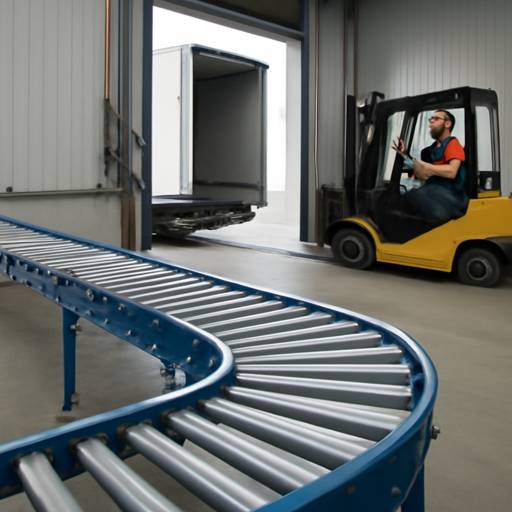
Throughput and ergonomics depend on details. Variable-speed drives let teams dial in the right pace to avoid pile-ups. Directional control enables fast changeovers between loading and unloading. Integrated LED lighting, fans, and intercoms enhance comfort and communication. For hybrid flows, a conveyor can feed into flexible gravity or powered roller lines that snake into tight spaces; zero-pressure accumulation sections protect product spacing and reduce jamming. Noise performance, IP ratings for dust and moisture, and service access points all matter in real environments where uptime is king.
Software and data integration elevate the value further. Barcode scanners, dimensioning and weighing modules, and vision systems can be mounted at the discharge to capture data the moment goods cross the dock threshold. Simple I/O ties to WCS/WMS orchestrate start/stop logic, jam detection, and routing. IoT-enabled drives and sensors stream performance metrics and fault codes to a maintenance dashboard, enabling condition-based work orders instead of firefighting. When teams can see mean time between failures, motor temperature trends, and belt health, they cut unplanned downtime and extend asset life.
Real-world impact is tangible. A cross-border e-commerce facility handling poly-bagged apparel and small electronics replaced manual unloading with two telescopic belts feeding flexible roller lines. Trailer dwell time dropped 38%, line density increased without adding dock doors, and musculoskeletal incidents declined. In a mixed freight warehouse serving both parcels and light industrial components, adopting a powered elevation knuckle reduced awkward lifts by up to 60% inside trailers. And for an express parcel terminal, integrating scanner gates at the conveyor discharge made parcel ID capture fully automatic, pushing accuracy to near 100% while maintaining a high PPH rate through late-evening peaks.
Deployment Scenarios and Best Practices for Peak Performance
Start deployment with a flow study. Map your product family (dimensions, weights, packaging), daily peaks by hour, and trailer mix. Measure current turn times and walking distances to establish a baseline. With that, you can model the PPH target and determine whether one unit can traverse multiple doors, or if dedicated conveyors are required per high-volume lane. In many parcel and e-commerce sites, a three-stage telescopic belt conveyor with a powered knuckle and adjustable elevation serves as the backbone, handing off to flexible gravity or powered roller lines for final placement. Industrial sites shipping cartons and crated goods may prefer heavier-duty belts paired with accumulation rollers to absorb variation in flow.
Plan the physical and digital interfaces early. Dock positions, bumpers, and guard rails should allow safe boom extension and operator access. Floor power drops, cable trays, and charger positions (if battery-powered move bases are used) need clear routing. On the digital side, decide how the conveyor exchanges signals with your WMS/WCS, scanner arrays, and safety PLC. Keep logic simple and fail-safe: if downstream is blocked, pause the belt; if an E-stop is hit, stop and light an alarm; if a jam is detected, reverse at low speed to clear. Standard operating procedures should outline who owns restart decisions, while visible KPIs—like PPH and dwell time—help keep teams aligned during peaks.
Train and tune for ergonomics first. Set default belt speeds to reduce chasing and awkward motions; adjust height and knuckle angle to keep the handling zone near waist height. Use illuminated zones and mirrors where sightlines are limited. Run a pilot on one dock for two weeks and capture cycle times, jam rates, and worker feedback. Tweak side guides, belt speed profiles, or fan positions before scaling across doors. Preventive maintenance is simple but vital: inspect belts for tracking, check rollers and bearings for noise, and keep sensors clean. With a light but regular PM cadence, many sites run round-the-clock with only planned micro-stops.
Case examples underline the playbook. An airport-adjacent parcel hub installed telescopic booms on five doors with a traversing base serving two additional overflow doors. By orchestrating belt speed against inbound volume and feeding a sorter directly, they lifted hourly throughput by 25% with the same crew size. A Southern China cross-border warehouse used conveyors with integrated scanners to auto-register inbound parcels at the truck face, transforming manual data entry into a hands-free, real-time feed for inventory visibility. If you’re evaluating options, explore a modern loading unloading conveyor lineup that includes extendable belts, flexible roller modules, and integration-ready controls to match your mix of express delivery, warehousing, and industrial loading scenarios.
Finally, design for flexibility. Demand shifts, SKU profiles evolve, and peak seasons grow longer. Modular, scalable conveyors—booms that can be lengthened, bases that can traverse, and peripherals that can be swapped—allow you to adapt without disrupting operations. When your dock becomes a dynamic, data-connected node rather than a bottleneck, you unlock faster turns, safer jobs, and a steady flow from trailer to stock or sorter. In the language of modern logistics, that is the compounding value of a well-chosen loading unloading conveyor.
