Transferring a patient from a seated position to standing is one of the most physically demanding tasks in healthcare and home care settings. For decades, caregivers relied on manual techniques that placed immense strain on their backs, shoulders, and knees. But the evolution of patient lifting technology has introduced a transformative solution: the power sit to stand lift. Unlike traditional lifts that require full patient passivity, a powered sit-to-stand device empowers individuals who retain some weight-bearing ability to participate actively in their transfer. This article explores the mechanics, benefits, and real-world applications of these devices, showing how they reduce injury risk while promoting patient dignity and independence.
Understanding the Mechanism and Core Benefits of a Power Sit to Stand Lift
A power sit to stand lift is a sophisticated mobility aid designed specifically for patients who can bear partial weight on their legs and have some trunk control. The device typically consists of a stable base with wheels, a mast, a padded knee block, and a powered lifting arm that attaches to a sling or vest worn by the patient. When activated, the lift gently raises the patient from a seated position into a standing posture, with the knee block preventing forward sliding. The power component—often an electric actuator or a battery-powered motor—ensures smooth, controlled movement without requiring the caregiver to manually crank or pump.
The primary advantage of this equipment lies in its dual benefit: it protects the caregiver and engages the patient. Caregivers no longer need to support the patient’s full body weight, drastically reducing the risk of musculoskeletal injuries. In fact, healthcare facilities that adopt powered sit-to-stand lifts report up to a 60% reduction in staff injury claims related to patient transfers. Meanwhile, patients benefit from the therapeutic effect of standing—even briefly—which improves circulation, maintains bone density, and preserves muscle strength. The ability to stand also enhances psychological well-being, as it fosters a sense of autonomy and normalcy.
Another critical feature is the stability and safety engineered into these devices. Most power sit to stand lifts come with a wide wheelbase, anti-tip mechanisms, and padded components that prevent bruising or skin shear. Many models include a built-in scale for weight monitoring, which is valuable for patients with chronic conditions such as heart failure or renal disease. Furthermore, the lift’s ability to adjust height and angle allows it to accommodate different chair, bed, or toilet heights, making it versatile across various environments—from hospitals and nursing homes to private residences.
When selecting a device, it is important to consider the patient’s weight capacity, the required range of motion, and the type of sling. A well-chosen power sit to stand lift becomes an extension of the care plan, enabling transfers that are both efficient and respectful. With proper training, a single caregiver can perform a transfer safely, something that would otherwise require two or more people using manual techniques.
Practical Applications and Real-World Case Studies in Sit-to-Stand Transfers
In clinical settings, the power sit to stand lift has proven invaluable for patients recovering from hip or knee replacement surgery, stroke survivors with unilateral weakness, and elderly individuals experiencing general deconditioning. These patients often have the strength to assist but lack the stability or confidence to stand unaided. By providing consistent, gentle assistance, the lift bridges the gap between complete dependency and independent mobility.
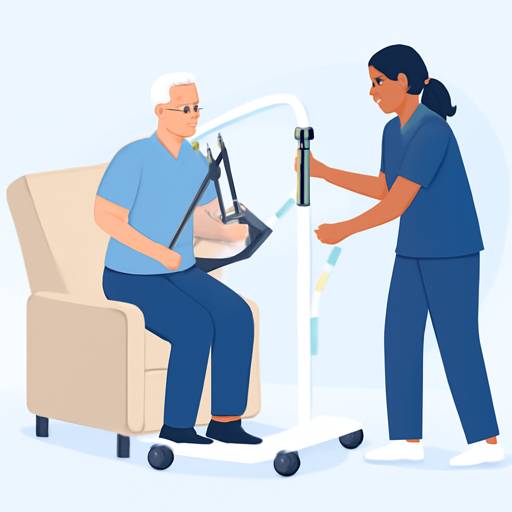
Consider the case of a 72-year-old man recovering from a total hip arthroplasty. Before surgery, his mobility was limited, and after the operation, he was afraid to bear weight on the new joint. Physical therapy sessions in the hospital used a power sit to stand lift to help him practice standing multiple times daily. Within five days, he progressed from requiring full lift support to using the device primarily for balance. His care team noted that the lift allowed him to focus on proper foot placement and posture without the distraction of pain or fear of falling. By the time he was discharged, he could stand with minimal assistance and transfer to a walker. This case highlights how the lift serves not merely as a transfer tool but as a rehabilitation aide.
Another real-world example comes from a long-term care facility that replaced their manual sit-to-stand aids with powered versions. Over six months, the facility tracked a 45% decrease in staff-reported back pain. The nurses’ aides reported that the power lift eliminated the “jerky” motions associated with manual pumps, reducing patient anxiety during transfers. The facility also observed that patients who were previously reluctant to get out of bed agreed to more frequent standing sessions because the process felt less abrupt. One resident with Parkinson’s disease, who had become increasingly afraid of standing due to episodes of freezing gait, regained confidence. The lift’s controlled ascend speed allowed her to pause mid-transfer if she felt unsteady, a feature impossible with manual alternatives.
Home care scenarios also demonstrate the device’s value. A 58-year-old woman with multiple sclerosis used a power sit to stand lift to transfer from her wheelchair to her bedside commode independently. The lift gave her the ability to remain living alone with only periodic caregiver visits. Her occupational therapist remarked that the lift was the single most impactful piece of equipment in her care plan, reducing the need for home health aides from daily to twice a week. These examples illustrate that when used correctly, a power sit to stand lift can transform the daily reality for both patients and caregivers.
Key Considerations When Choosing and Using a Powered Sit-to-Stand Device
Selecting the right power sit to stand lift requires evaluating the patient’s specific abilities and the care environment. Not all patients are candidates—those who cannot bear any weight, lack trunk control, or have severe cognitive impairment may require a full-body sling lift instead. However, for the right population, the benefits are substantial. The device must have a weight capacity that exceeds the patient’s weight, typically ranging from 300 to 450 pounds in commercial models. The base width should be narrow enough to fit through doorways yet wide enough for stability.
Battery life is another crucial factor. In home settings where the lift may be moved between rooms, a long-lasting sealed lead-acid or lithium-ion battery ensures uninterrupted use. Many modern power sit to stand lifts offer emergency descent controls and manual backup systems in case of power failure, an essential safety feature. The knee block, which supports the patient’s knees during the stand, should be contoured and padded to distribute pressure evenly. Some models allow the sling to remain in place under the patient’s clothing throughout the day, simplifying repeated transfers.
Training for caregivers is non-negotiable. Even with a powered device, improper technique can lead to patient falls or skin injury. Caregivers must learn how to position the knee block correctly, attach the sling without twisting, and operate the lift’s controls smoothly. The manufacturing instructions typically recommend a forward lean angle of about 15 to 20 degrees to encourage the patient’s active participation. Regular equipment checks—such as inspecting straps for fraying, testing brakes, and lubricating moving parts—prevent mechanical failure. For those seeking a reliable and extensively tested model, consider exploring the power sit to stand lift options available from trusted providers. These units are designed with ergonomics and patient comfort at the forefront, offering adjustable features that accommodate a wide range of care scenarios.
Finally, integration with other assistive technologies can enhance outcomes. For instance, linking the lift with a bedside floor scale or a fall detection system provides additional data for care planning. In rehabilitation units, physical therapists sometimes combine lift use with gait trainers or parallel bars to transition patients from standing to walking. The power sit to stand lift is not a standalone solution but a tool that, when embedded in a comprehensive mobility program, supports functional gains and reduces long-term care costs by delaying institutionalization.